The Framework
- Draw your circle of control. Write down what you're worried about. Then honestly mark each item: is this within my control, partially within my control, or outside my control?
- Accept what's outside the circle. Things outside your control will happen regardless of your worry. Anxiety about them is wasted energy. Acknowledge reality and release attachment to outcomes you can't influence.
- Act on what's inside. For everything within your control, identify concrete actions. Your thoughts, your effort, your preparation, your response—these are yours. Work them fully.
- Influence the middle ground. Some things are partially controllable. You can't control outcomes, but you can influence probabilities. Take your best action, then release the result.
- Expand your circle over time. As you master what's inside your control, your effective control grows. Skills, relationships, and resources expand what you can influence.
Use It When
- Anxiety about uncertain outcomes is paralyzing you.
- You're spending energy on things you can't change.
- External events feel overwhelming and out of control.
- You need to focus during chaos or uncertainty.
- Worrying is replacing productive action.
Avoid When
- You're using it to justify passivity on things you could influence.
- Systemic issues require collective action, not just personal acceptance.
- You're suppressing valid emotions that need processing.
- The situation calls for advocacy or fighting for change.
Examples
You've applied for a job. Outside your control: the hiring decision, other candidates, economic conditions. Inside your control: your preparation, your interview performance, your follow-up, your continued skill development. Focus there.
Facing a health concern, you can't control your genetics or past choices. You can control: current diet, exercise, sleep, stress management, following medical advice. Pour energy into your controllable inputs.
You can't control how others feel about you or whether they change. You can control: how you show up, your communication, your boundaries, whether you stay or leave. Focus on being the person you want to be.
Global crises feel overwhelming. You can't control world events. You can control: your information diet, your local actions, your vote, your donations, your conversations, your personal preparation. Act where you have power.
Further Reading
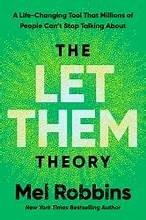
The Let Them Theory
A practical application of circle-of-control thinking to relationships and interpersonal dynamics. Robbins shows how releasing control over others expands your own peace and power.
View on Amazon →
The Courage to Be Disliked
Adlerian psychology's "separation of tasks" is essentially the control circle applied to human relationships. Understanding whose task is whose eliminates much interpersonal anxiety.
View on Amazon →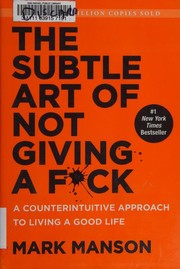
The Subtle Art of Not Giving a F*ck
Manson's approach to responsibility and control helps clarify what deserves your energy. Taking responsibility for your life means focusing on what you can actually control.
View on Amazon →