The Framework
- Notice the thought arising. When you feel a strong emotion, pause and identify the thought behind it. Thoughts often appear so quickly we mistake them for reality.
- Label it as a thought. Say to yourself: "I'm having the thought that..." This simple reframe creates distance between you and the mental event.
- Question the source. Ask: Is this thought based on facts or assumptions? Is it helpful? Is it even mine, or did I absorb it from somewhere else?
- Let it pass. Thoughts are like clouds—they appear, drift across your mind, and dissolve. You don't have to engage with every one. Observe and release.
- Choose your response. With space between thought and action, you can respond intentionally rather than react automatically. The thought doesn't control you.
Use It When
- You're spiraling into negative self-talk or catastrophizing.
- Anxiety is building based on imagined scenarios.
- You're about to react emotionally in a way you'll regret.
- Intrusive or unhelpful thoughts are disrupting your focus.
- You need to make a clear-headed decision under pressure.
Avoid When
- You're processing genuine grief or trauma that needs to be felt.
- The thought is actually a valid warning signal requiring action.
- You're using it to bypass necessary emotional processing.
- Professional mental health support would be more appropriate.
Examples
Before a presentation, you think "I'm going to fail." Pause and reframe: "I'm having the thought that I might fail." This isn't a fact—it's anxiety. You've prepared. Let the thought pass and focus on delivering value.
Your partner is quiet and you think "They're angry at me." Before spiraling, observe the thought. Is this fact or interpretation? Often, our thoughts project our fears onto ambiguous situations. Ask instead of assuming.
You look in the mirror and think "I'm not good enough." Notice this is a thought, not truth. Where did it come from? Would you say this to a friend? Let the thought float by and choose a more accurate narrative.
Facing a new opportunity, you think "I can't do this." Label it: "I'm having a fear thought about my capabilities." Examine the evidence. Past successes suggest otherwise. Don't let one passing thought close doors.
Further Reading

Don't Believe Everything You Think
A bestselling guide to understanding how thoughts create suffering and how to find peace by changing your relationship with thinking itself.
View on Amazon →
The Courage to Be Disliked
Explores how our interpretations of events, not the events themselves, cause our emotional responses. A powerful reframe on taking control of your inner life.
View on Amazon →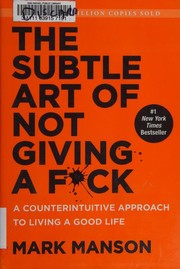
The Subtle Art of Not Giving a F*ck
Challenges the positive thinking movement and offers a counterintuitive approach to thought management: accept the negative, choose your struggles, and stop trying to feel good all the time.
View on Amazon →